


Why European Garden Centres Are Switching to Polycarbonate Hobby Greenhouses
 Aug 31, 2026|
 View:234
Polycarbonate panels can take hits that would destroy glass, so your plants and customers stay safe. This material also handles heat better, keeping plants warmer in winter and cooler in summer. Over time, the savings convince retailers and home gardeners alike. A hobby greenhouse made of polycarbonate lasts many years longer without needing replacement. Quality matters when you buy a greenhouse. Growell makes mini and hobby greenhouses with certified quality, so every one is built to last. Pick polycarbonate greenhouses for safety, efficiency, and peace of mind.
Key Takeaways
Polycarbonate greenhouses are a lot stronger than glass ones. They can handle hail and won't shatter into dangerous, sharp pieces.
They keep plants warmer in winter and cooler in summer. This saves energy and gives a longer growing season.
Polycarbonate spreads light evenly. Plants grow better and are less likely to get leaf burn.
These greenhouses save money in the long run. They require fewer fixes and less upkeep.
Gardeners want products that are simple and built to last. Polycarbonate greenhouses fit this need and also help the planet.
Durability and Safety
Impact Resistance and Weather Protection
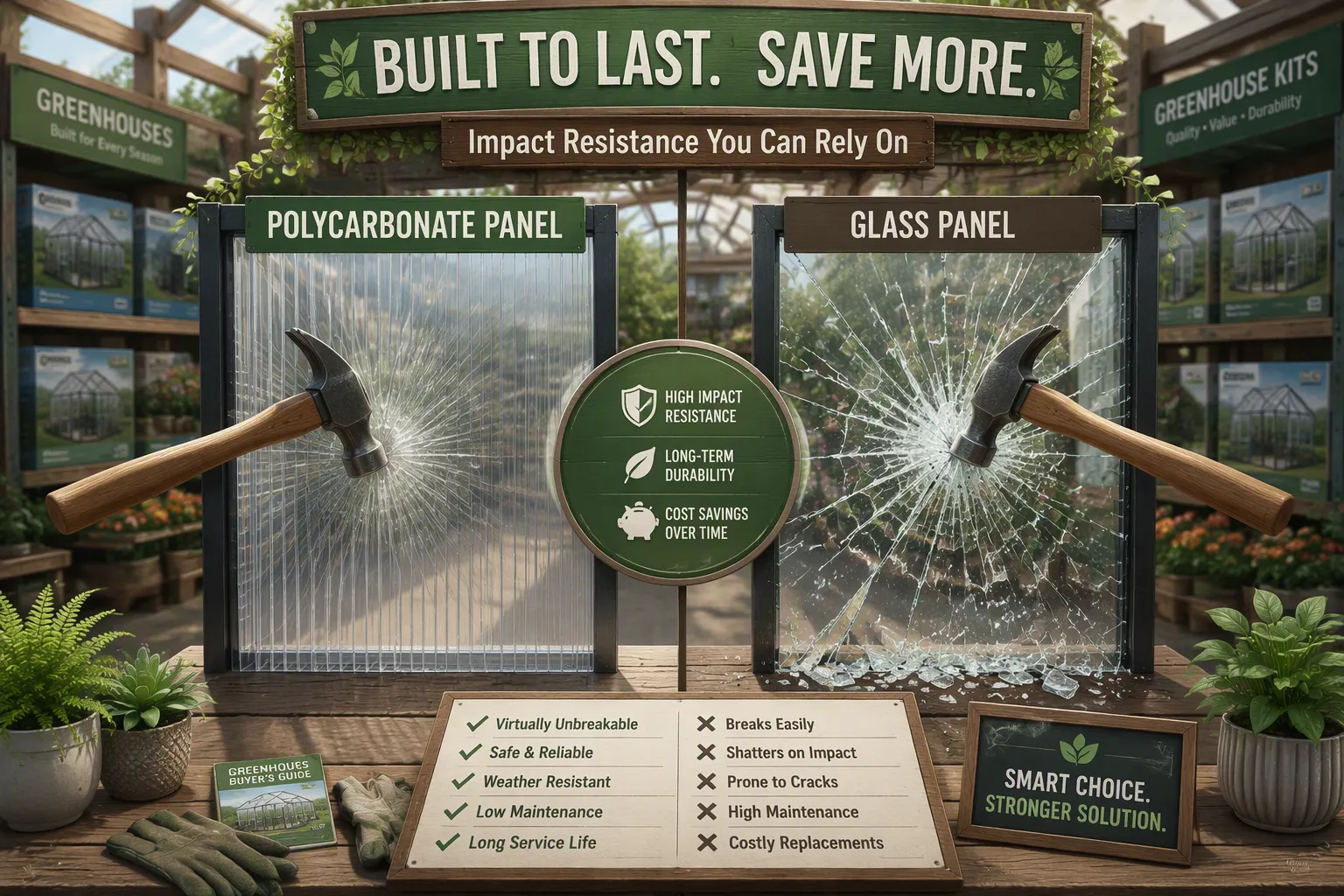
You need a greenhouse that can handle any weather. Polycarbonate gives that safety. Standard glass breaks when hit. Polycarbonate bends, dents, or cracks without making sharp pieces. This material is about 300 times stronger than normal glass. It is also stronger than tempered safety glass, which still breaks into pieces under enough force. For European garden centers, this difference matters every day.
4-wall polycarbonate is about 300 times stronger than normal glass. It is also much stronger than tempered safety glass. Tempered glass resists hits better than standard glass, but it still breaks into pieces under enough force. Polycarbonate will bend, crack, or dent but does not make dangerous shards.
Hailstorms test every greenhouse at some point. The table below shows how materials compare when new and after aging:
Material | Hail Resistance Class (New) | Hail Resistance Class (Aged) |
|---|---|---|
Polycarbonate thin-wall sheets | HR5 (up to 5 cm hailstones) | HR3 (up to 3 cm) |
Float glass (2-4 mm) | HR3 (up to 3 cm) | HR3 (no aging effect) |
Chemically tempered glass (2-4 mm) | HR5 (up to 5 cm) | HR5 (no aging effect) |
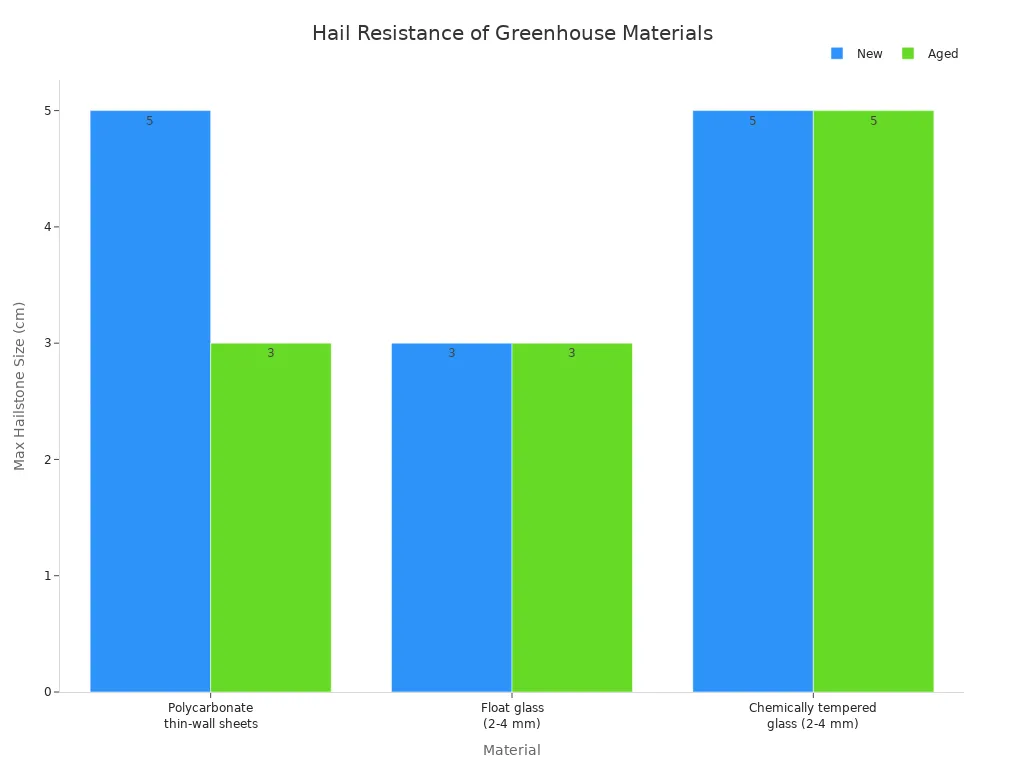
New polycarbonate handles hailstones up to 5 centimeters across. That is about the size of a golf ball. Float glass only handles 3 centimeters. Chemically tempered glass matches polycarbonate when new, but polycarbonate's structure absorbs energy by bending. Glass breaks in a brittle way. In Charpy impact tests, polycarbonate reaches 65-75 kJ/m² and often does not break at all. Acrylic glass only reaches about 2 kJ/m². Glass acts like acrylic. Polycarbonate also stays strong in cold weather, while glass and acrylic lose impact strength when it gets cold.
This strength means less damage during shipping and handling. You can stack, load, and move polycarbonate greenhouses without worry. Your customers get complete kits every time. That means fewer returns, fewer complaints, and less time wasted.
Reducing Liability and Injury Risks
Safety concerns go beyond weather. Broken glass in a garden center creates instant dangers. Customers walk through aisles every day. Children touch displays. A broken pane means sharp edges, cleanup costs, and possible injury claims. Polycarbonate removes that risk completely. No shards means no cuts. No pieces means no lawsuits.
For stores, this lowers liability a lot. You avoid the nightmare of a customer hurt by a broken glass panel. You also avoid the cost of replacing cracked panes on display models. Polycarbonate greenhouses last up to ten years with good care. That long life means fewer warranty claims and less support after sale. The money case is clear: fewer replacements, fewer claims, fewer headaches.
The quality of your greenhouse source matters here. You want panels that meet certified standards. Growell makes aluminum-framed greenhouses with polycarbonate panels under ISO9001 and CE certificates. These certificates show steady quality across every unit. When you stock polycarbonate greenhouses from a certified supplier, you know each product meets the same safety and strength rules. That steadiness protects your reputation and your profits.
European garden centers switching to polycarbonate greenhouses understand this idea. They see the direct link between material strength and business safety. They know that a greenhouse built to take hits protects everyone. Your customers get a product that survives harsh weather. Your staff avoids dangerous cleanup work. Your business avoids liability claims. Every angle points to polycarbonate as the safer choice.
The proof is clear. Polycarbonate greenhouses offer better impact strength, better hail protection, and no shard risk. Glass cannot match these safety features. When you look at greenhouse options for your garden center, put durability and safety first. Your customers will thank you. Your insurance provider will notice. Your profits will show the difference.
Thermal Efficiency and Light Diffusion
Superior Insulation for Extended Growing Seasons
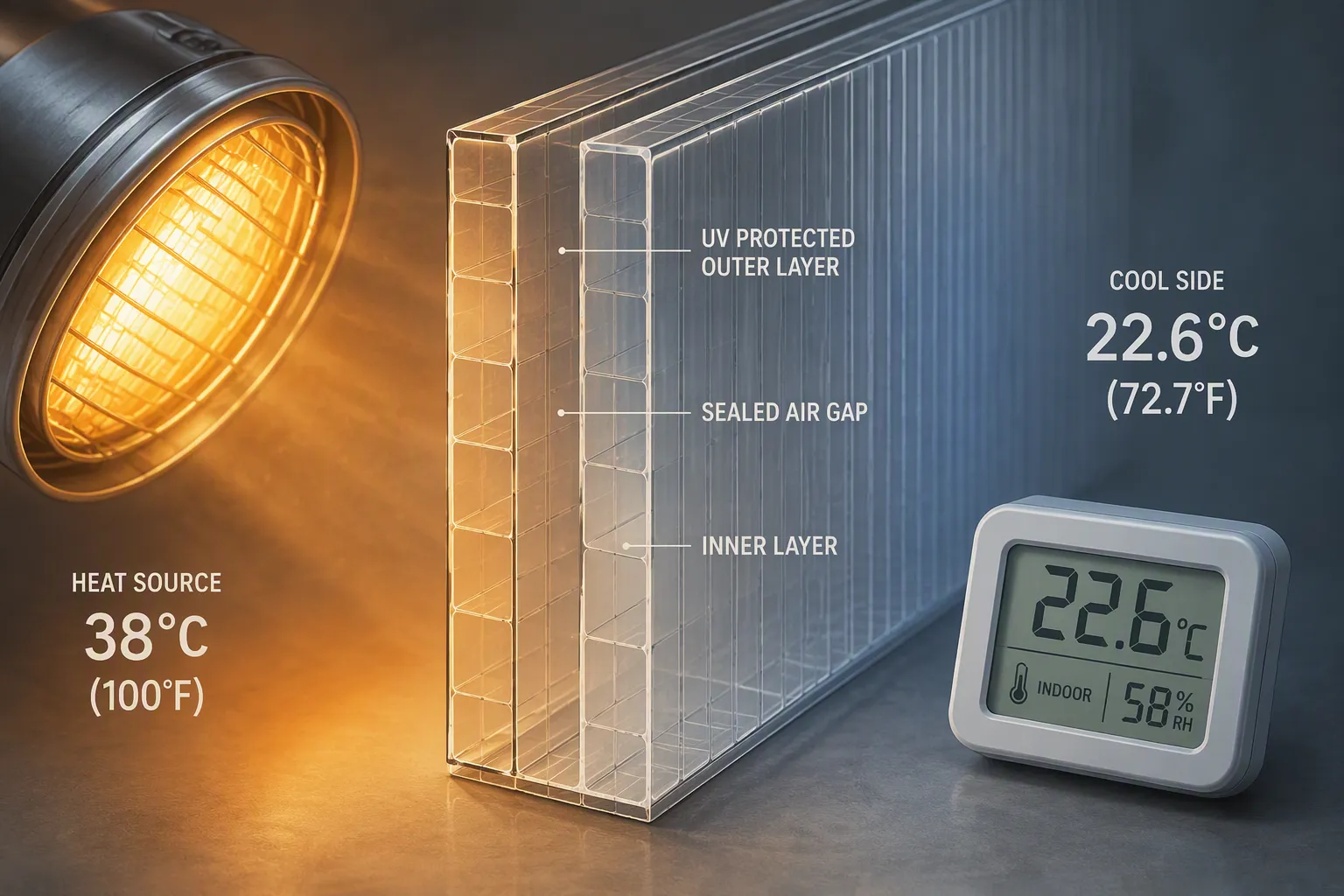
You want a greenhouse that keeps warmth when it gets cold. Double-wall polycarbonate does this with simple science. The panels have two layers with a sealed air pocket between them. That trapped air acts as a shield. Heat cannot move through easily. This design gives you a big edge over regular glass.
The numbers show it clearly. A standard 3mm single glass pane has an R-value of 0.96. A 6mm twin-wall polycarbonate panel reaches 1.62. That is a 69% boost in insulation. Another study shows similar results: glass at 0.95 versus polycarbonate at 1.54, a 62% gain. Either way, you get about two-thirds better insulation with polycarbonate. This means your greenhouse stays warmer after sunset.
Glazing Type | R-Value |
|---|---|
3mm Single Glass | 0.96 |
6mm Twinwall Polycarbonate | 1.62 |
Nighttime performance matters most for serious gardeners. Single-pane glass has very little insulation value. Heat escapes quickly through the thin material. Your plants face sharp temperature swings. Your heater works harder and longer. Double-wall polycarbonate slows that heat loss a lot. The internal air space holds warmth better. Your greenhouse keeps a steadier environment through the night.
Double-wall polycarbonate will not remove the need for a heater in freezing weather. However, better insulation gives a stronger starting point, helping maintain a more manageable growing environment and reducing the workload on heating equipment.
This insulation quality directly extends your growing season. You can start seeds earlier in spring. You can keep tender plants alive later into autumn. Some gardeners report heating cost savings between 30% and 50% compared to single-pane glass. That savings adds up over a full season. You spend less money keeping your greenhouse warm. You grow more vegetable crops because the environment stays steady.
The quality of the panel construction matters here. Cheap polycarbonate may have thin walls or poor sealing. Quality panels from certified manufacturers keep their R-value for years. Growell builds their polycarbonate greenhouses with precision-engineered aluminum frames and properly fitted panels. The result is a greenhouse that works as promised, season after season.
Diffused Light for Healthier Plant Growth
Light quality affects plant health as much as temperature. Glass lets sunlight through in straight lines. This creates harsh shadows and bright spots. Some leaves get scorched. Others stay in darkness. Your plants grow unevenly. Polycarbonate fixes this problem through light diffusion.
The material scatters sunlight in every direction. Instead of direct beams, your plants receive soft, even light from all angles. This diffusion reaches nearly 100% haze with high-quality corrugated polycarbonate panels. Even high-haze glass only achieves 70% or more diffusion. Polycarbonate greenhouses give you superior light scattering potential.
Diffused light helps your crops in several ways. Lower leaves receive more light because shadows disappear. Photosynthesis happens across the whole plant, not just the top canopy. You get bushier growth and more uniform development. Seedlings stay compact instead of stretching toward a single light source. Your vegetable crops produce better yields because every part of the plant works well.
Polycarbonate also blocks 99% of harmful UV rays while transmitting up to 89% of beneficial light. Your plants get the wavelengths they need for strong growth. You avoid the scorching that happens when glass focuses sunlight into hotspots. The diffused light prevents leaf burn and heat stress. Your greenhouse becomes a gentler environment for delicate seedlings and mature plants alike.
The quality of light transmission depends on the panel grade. Premium polycarbonate panels keep their clarity and diffusion properties for years. UV-resistant coatings prevent yellowing and clouding. This quality ensures your greenhouse keeps performing at its best. You invest once and enjoy the benefits for up to ten years.
For European garden centres, this mix of insulation and light diffusion creates a strong story. You can show customers how polycarbonate greenhouses protect plants from temperature swings and light damage. You can explain the science behind better growth. When you stock quality polycarbonate greenhouses, you offer real value that glass cannot match. Your customers see healthier plants. They tell their friends. Your reputation grows along with their gardens.
Cost-Effectiveness and Low Maintenance
Lower Upfront and Long-Term Costs
When you compare total cost of ownership, polycarbonate greenhouses clearly beat glass. The initial price of polycarbonate greenhouses is competitive with glass options. But the real savings come from other places. Polycarbonate weighs much less than glass. This lighter weight cuts your shipping costs significantly. You pay less to transport each greenhouse kit to your garden centre. Your customers also pay less for delivery.
The long-term cost advantages are even bigger. Glass panes crack and break often. You must replace them each time. Each replacement costs time and money. Polycarbonate panels rarely need replacement. They handle impacts that would shatter glass. This durability means fewer warranty claims for you. Your after-sales support costs drop. Your customers stay happy because their greenhouse lasts longer.
The quality of your greenhouse matters for cost savings. When you focus on sourcing polycarbonate greenhouses from certified manufacturers, you get consistent quality. You avoid the problems of cheap materials that yellow or crack early. Quality polycarbonate greenhouses maintain their performance for years. This reliability protects your investment.
For garden centres, the financial case is clear. Stocking polycarbonate greenhouses reduces your liability. It reduces your shipping costs. It reduces your customer service workload. These savings add up across your entire inventory. You can offer competitive pricing to your customers while keeping good margins. The cost advantages of polycarbonate over glass are real and measurable.
Minimal Upkeep for Maximum Enjoyment
Hobbyists want to spend time gardening, not repairing their greenhouse. Polycarbonate supports this goal perfectly. The material does not rust, rot, or corrode. It stays strong in all weather conditions. You never need to paint or treat it. The aluminum frame also resists corrosion. Your greenhouse stays looking good with very little effort.
Cleaning polycarbonate is simple. You use warm water and mild soap. A soft cloth or sponge works well. You should clean the panels every 4 to 6 months as a baseline. For best clarity in dusty or humid areas, clean 2 to 3 times per year. This regular cleaning keeps light transmission high. Your plants get the light they need for strong growth. The whole process takes just a few hours each year. You spend more time enjoying your garden and less time maintaining your greenhouse.
For garden centres, this low maintenance is a huge selling point. You can tell customers that their greenhouse will not need constant repairs. They will not call you with complaints about broken glass or rusted frames. They will enjoy their greenhouse instead of fixing it. This reduces your after-sales support workload. It also builds customer loyalty. Happy customers come back and recommend your store.
Your focus on quality when sourcing polycarbonate greenhouses pays off here too. Quality panels have UV-resistant coatings. They resist yellowing and clouding. They keep their clarity for years. Quality frames have reinforced corners and secure joints. They stay tight and stable. Every part works as intended. You get a greenhouse that delivers on its promises.
When sourcing polycarbonate greenhouses, consider the customization options available. Growell offers customization in colors, sizes, and designs. You can tailor products for your specific market. This flexibility helps you stand out from competitors. You meet unique customer needs. Your sales increase as a result.
Greenhouse kits from Growell show this quality in every detail. The aluminum frames are precision-engineered. The polycarbonate panels fit perfectly. The assembly is straightforward. You get a complete kit that goes together easily. Your customers build it once and enjoy it for years. The combination of low maintenance and long life makes polycarbonate the smart choice.
When you consider all the factors, the choice becomes clear. Polycarbonate greenhouses offer lower upfront costs through shipping savings. They offer lower long-term costs through durability. They offer minimal maintenance through smart material choices. European garden centres switching to polycarbonate understand these benefits. They see the total cost of ownership. They see the customer satisfaction. They see the reduced workload. The switch makes sense from every angle.
Market Trends Driving European Garden Centres Switching
The Rise of the Low-Maintenance Gardener
A new kind of gardener now comes to your store. They want nice plants and good growth without always fixing things. They care most about ease and long life. These buyers are happy to spend more for a product that works without problems. They call it 'set it and forget it.' You can see this change in the need for polycarbonate greenhouses.
This trend shows why European garden centers choose polycarbonate greenhouses. You sell what customers want. You also cut down your own work. Polycarbonate panels do not crack or turn yellow. The aluminum frames never rust. Your customers use their greenhouse for years without needing your help. That leads to fewer problems and more trust.
Growell shows this market change well. This company has made aluminum-framed greenhouses since 2002. They have almost 95 models of small and hobby greenhouses. Their products use polycarbonate panels that are easy to put together yourself. You can see the world trust in this material from their exports. They send most of their products to Europe and North America. Their ISO9001 and CE certificates show steady quality and safety rules. When you pick polycarbonate greenhouses from Growell, you get tested dependability.
Environmental and Sustainability Benefits
Sustainability now guides what people buy in Europe. Your customers ask hard questions about how things affect the environment. They want products that are good for the planet. Polycarbonate has a good story here. Making it uses less energy than making glass. Glass needs a lot of heat to melt and shape. Polycarbonate is lighter and uses less energy to make.
Material | Production Carbon Footprint | Lifespan Impact |
|---|---|---|
Glass | Higher (due to energy-intensive melting and shaping) | Longer lifespan, requiring infrequent replacements |
Polycarbonate | Lower (due to lightweight, less energy-intensive manufacturing) | Shorter lifespan, leading to more frequent replacements and potentially higher cumulative emissions over time |
You can see the give-and-take clearly. Polycarbonate begins with a smaller carbon footprint. Glass might last longer before you need to replace it. But polycarbonate greenhouses do not break as easily as glass. Fewer broken panels means fewer changes in real use. The strength of good polycarbonate panels makes up for the lifespan gap. You also cut down on shipping pollution because polycarbonate is much lighter.
Your choices of where to buy matter for sustainability. When you pick polycarbonate greenhouses from certified makers, you make sure the production is responsible. Growell offers many ways to customize colors, sizes, and designs. You can match products to your market while keeping environmental standards. Their good prices help you offer value without losing quality. These customization options help you stand out in your stock. You make your store seem forward-thinking and eco-friendly. That name draws in modern gardeners who care about their impact.
The market trends go one way. Gardeners who want low upkeep need strong products. Buyers who care about the environment want sustainable choices. Polycarbonate greenhouses give both. European garden centers switching to this material meet customer needs and lower business risk. You set yourself up as a smart store for the future.
The shift to polycarbonate is not a passing trend. european garden centres switching to polycarbonate meet customer demand for durable greenhouses. You reduce business risk and liability. The quality of polycarbonate panels ensures long-lasting performance. You deliver real savings. Your polycarbonate greenhouses are a smart choice. These models protect plants. High-quality polycarbonate greenhouses build trust. Evaluate your greenhouse offerings today. Consider the value of polycarbonate for your business. Your customers deserve quality greenhouses. Stock polycarbonate greenhouses and grow your reputation. Quality polycarbonate greenhouses deliver consistent quality results. These polycarbonate greenhouses require minimal maintenance. Your greenhouse investment pays off. Choose quality polycarbonate greenhouses for lasting value. The savings are clear. Polycarbonate greenhouses offer superior quality. Your greenhouse will serve you well. Polycarbonate is the ideal choice.
FAQ
How long do polycarbonate greenhouses last?
Quality polycarbonate greenhouses last up to ten years. The panels resist impact and UV damage. This durability makes them a smart buy. You replace them far less often than glass ones. This saves you money.
Is polycarbonate better than glass for greenhouses?
Yes. It keeps heat better and spreads light well. Polycarbonate blocks 99% of UV rays while letting in 89% of light. These greenhouses protect your plants from bad weather. Glass units can't match that. Quality polycarbonate greenhouses give steady results.
Do polycarbonate panels yellow over time?
Quality panels have UV-resistant coatings. This stops yellowing. Polycarbonate greenhouses stay clear for years. They need very little care from you.
Can you customize polycarbonate greenhouses?
Yes. Makers offer options for colors, sizes, and designs. You can fit the greenhouse to your space. This helps you create the perfect structure. Greenhouses built this way suit any garden layout.
Are polycarbonate greenhouses easy to assemble?
Yes. Quality kits are made for DIY assembly. The aluminum frames and panels fit together easily. You can build your greenhouse in a weekend. This ease makes them popular with hobbyists.
Recommended Products

HGLA Series deep winter polycarbonate lean to greenhouse kits

GMB Series Polycarbonate Aluminum Twin Greenhouse for big yard

GMA Series Aluminum Framed Twin Greenhouse with Polycarbonate Panels

Y Series DIY Sturdy Aluminum Polycarbonate Greenhouse for Gardens

R Series best outdoor aluminum polycarbonate greenhouse kit


Recent News
1.Top 10 Small Polycarbonate Greenhouse Manufacturers in 2026
2026-04-232.Small polycarbonate Greenhouse: Why 6 mm UV-Protected Twin Wall
2026-08-253.Why European Garden Centres Are Switching to Polycarbonate Hobby Greenhouses
2026-08-314.Standard greenhouse dimensions and types for hobbyists
2025-12-095.10 Best Hobby Aluminum Greenhouse Makers in China (2026)
2026-02-046.Changzhou Growell Garden: Your Trusted OEM Partner for Premium Hobby Greenhouse Kits
2026-05-197.Top 10 Small Garden Greenhouse Manufacturers: A Comprehensive Guide for Hobbyists
2026-05-298.CE & ISO-Certified Hobby Greenhouse Kits Factory: Ensuring Compliance for EU & UK Importers
2026-08-14

