


How Rust-Proof Aluminum Frames and UV-Blocking Polycarbonate Panels Reduce After-Sales Claims in Greenhouses
 Oct 14, 2026|
 View:1
Rust-proof aluminum frames stop rust. UV-blocking polycarbonate panels stop sun damage. These two material traits directly reduce after-sales claims. Products last longer outdoors. Fewer failures mean fewer warranty calls, returns, and repairs.
This result protects profit and brand trust. Manufacturers, procurement teams, and brand owners face a clear choice. They can pick materials that fail in moisture and sunlight. They can also invest in materials that last. The second path lowers claim rates and builds stronger customer relationships.
Material selection is a proactive business decision. It shapes long-term costs and market reputation. Durable frames and panels keep products working. They keep claims out of the support queue.
Key Takeaways
Aluminum frames that resist rust stand up to moisture and salt in the air. They last longer than steel frames. This lowers warranty claims caused by corrosion.
UV-blocking polycarbonate panels block 99% of UV rays. They stop yellowing and brittleness. This makes panels last longer and means fewer replacements.
Using these two materials together stops both rust and sun damage. Fewer product failures mean fewer returns, repairs, and support calls.
Pick materials based on what they cost over their whole life, not just the price per piece. Materials that last protect your profit and help you earn customers' trust for years.
The Real Cost of After-Sales Claims
How Claims Drain Profit Margins
Every warranty claim brings direct costs. Labor, shipping, replacement parts, and paperwork all use up resources. These costs cut into margins with each incident.
The money problem goes past the replacement itself. Labor costs for handling warranty claims are not covered. Shipping costs for returns also fall outside normal coverage. A defective product replacement may include seller-covered parts and shipping, but labor stays the customer's job. Returns not caused by damage or defect put full shipping costs on the buyer. These gaps cause friction and add paperwork for manufacturers.
Growell makes over 100,000 pieces each year with a 10-year service life goal. This volume makes claim reduction key to keeping wholesale and OEM/ODM partnerships. Lower claim rates directly cut after-sales costs and protect partner relationships.
The Damage to Brand Trust
Repeated warranty claims hurt customer confidence. Buyers who deal with product failures think twice before buying again. This pattern cuts repeat business, especially for outdoor products sold through e-commerce and retail channels.
Customer complaints and returns signal quality problems to the market. Each bad experience spreads through reviews and word-of-mouth. Brands lose trust when products fail before their expected lifespan. The damage builds over time and affects future sales.
Manufacturers who reduce after-sales claims protect both profit and reputation. Durable materials stop the failures that trigger claims. This approach lowers after-sales costs and builds long-term customer relationships.
Rust-Proof Aluminum Frames Prevent Corrosion Failures
Why Aluminum Resists Rust and Moisture
Aluminum naturally forms a thin oxide layer when it touches air. This layer works like armor. It covers the surface and stops more oxidation. Iron and steel act in a different way. They make rust, which flakes off and lets fresh metal face more damage. The aluminum oxide layer is thick and sticks well. It stays put and keeps doing its job.
This self-healing trait gives aluminum a clear win in wet conditions. A scratch on the surface forms a new oxide layer almost right away. Short contact with clean water does not hurt the metal. The oxide layer stays stable when water pH is between 4 and 8.5. This range covers most rain and condensation. Steel frames need sacrificial coatings like zinc to last. Aluminum already has its own protection.
Field data backs up this advantage. In 500-hour salt spray tests per ASTM B117, anodized aluminum showed only light whitening. Powder-coated steel showed small creep from scribes after 300 hours. In coastal resort tests over two years, aluminum frame failure rates were 3%, compared to 11% for steel.
Environment Type | Aluminum Frame Failure Rate | Steel Frame Failure Rate |
|---|---|---|
Coastal / High Salt | 3.2% | 14.7% |
High Humidity / Inland | 1.8% | 8.5% |
Arid / Dry Climate | 0.9% | 4.1% |
Structural Integrity in Humid Climates
Moisture, rain, and condensation threaten outdoor structures every day. A greenhouse in a humid climate faces constant exposure. Steel frames in these conditions may show rust within 10 to 12 years. An aluminum frame greenhouse can last 50 years in the same environment. Salt air is the most hostile condition for steel. Even heavy galvanization may last only 8 to 12 years near the ocean. Marine-grade aluminum endures indefinitely.
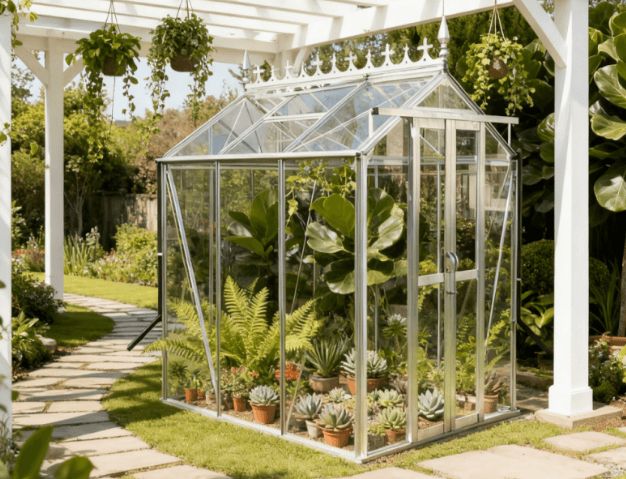
Growell's aluminum hobby greenhouse kits use superior aluminum frames. These frames deliver heat preservation, sun protection, and stress resistance. The aluminum polycarbonate greenhouse frame design pairs corrosion resistance with structural strength. A polycarbonate aluminium frame system keeps its shape under wind gusts and snow loads. Growell produces aluminum polycarbonate greenhouse kits for wholesalers and retailers across Europe and America. Each greenhouse benefits from powder-coated aluminum that resists moisture and maintains its finish.
UV-Blocking Polycarbonate Panels for Polycarbonate Greenhouses
How UV Resistance Stops Yellowing and Brittleness
Polycarbonate soaks up UV radiation before any damage can happen. This stops yellowing, color change, and brittleness. Without protection, UV light breaks polymer chains through photodegradation. The damage changes how light passes through and gives a yellow tint. Later, the panel becomes brittle and loses its strength.
UV stabilizers fix this problem. Benzotriazoles are like molecular sunscreen; they absorb UV energy. Hindered amine light stabilizers catch free radicals before they cause damage. These additives work together to keep polycarbonate sheets from fading or aging early.
Stabilizer Class | How It Works | Typical Loading |
|---|---|---|
UV Absorbers (UVAs) | Absorb UV radiation and release it as heat | 0.1%–0.5% |
Hindered Amine Light Stabilizers (HALS) | Capture free radicals from photo-oxidation | 0.2%–1.0% |
UV-protected polycarbonate sheets stop 99% of UV rays. This protection makes them last 5 to 15 years. Growell's polycarbonate greenhouses use strong polycarbonate or glass panels for heat preservation and sun protection. These polycarbonate greenhouse covering options give dependable UV protection for outdoor use.
Preserving Strength and Light Transmission
UV-stabilized polycarbonate panels let 88% of light through. Plants get steady sunlight for healthy growth. The panels also resist acid, alkali, and moisture. This helps polycarbonate greenhouses handle wind and weather in many climates.
Growell's aluminum polycarbonate greenhouse kits combine UV-resistant materials with strong frames. The multiwall polycarbonate panels resist impact and provide insulation. Growell tests UV resistance using UV resistance testing protocols. These greenhouses meet ISO9001, CE, and BSCI standards. Growell produces over 100,000 pieces annually with a 10-year service life goal.
Polycarbonate greenhouses benefit from UV and weather resistance. The material keeps its clear look and strength for years. Growell's greenhouses serve wholesalers and retailers across Europe and America. Each greenhouse gives lasting UV resistance and UV-resistant performance. Buyers seeking UV-resistant materials find reliable options in Growell's catalog. The greenhouse covering resists yellowing and stays clear. Growell's polycarbonate greenhouse designs help gardeners worldwide.
Combined Impact on UV Resistant Outdoor Products
Rust-proof aluminum frames and UV-blocking polycarbonate panels stop the two main causes of after-sales claims: rust and UV damage. Each material fixes one problem by itself. Together, they give UV-resistant outdoor products full protection. Moisture attacks frames. Sunlight attacks panels. This team blocks both dangers at the same time.
Fewer Maintenance Calls and Replacements
Outdoor and damp places are hard on weak materials. Rain, condensation, and salt air speed up rust. Strong sunlight breaks down plastics over time. These forces work together to shorten product life. Aluminum plus UV-stabilized polycarbonate changes that outcome.
Powder-coated aluminum greenhouse frames last 15 years or more. Near the coast, they can reach 20 to 30 years. Owners wash them once or twice a year. They do not need painting, rust treatment, or a new coating. The protective oxide layer repairs itself when scratched. Steel greenhouse frames act differently. Near the coast, steel lasts 5 to 10 years. Inland, it lasts 10 to 20 years. Owners must repaint every 3 to 5 years. Rust needs sanding, treatment, and repainting. Visible rust can appear within 3 to 5 years in coastal or humid conditions.
UV-stabilized polycarbonate panels resist yellowing for 10 to 15 years. Their UV protection is co-extruded or bonded into the panel. No new coating is needed. Standard polycarbonate panels may yellow in 3 to 5 years. Those panels need more frequent replacement or upkeep. Growell's polycarbonate greenhouses use durable polycarbonate or glass panels. These greenhouses keep heat in and block sun. The polycarbonate sheets and frames work as one system. This system keeps UV protection strong for the product's whole life.
Lower Lifecycle Costs and Reduced After-Sales Claims
When aluminum frames and UV-blocking polycarbonate panels work together, they cut after-sales costs in two ways. Rust claims drop because frames never rust. UV damage claims drop because panels resist yellowing and brittleness. Fewer failures mean fewer warranty calls, returns, and repairs. This result directly lowers after-sales claims.
Growell offers nine series and about 95 models. The company provides OEM/ODM services for wholesalers, retailers, and e-commerce brands across Europe and America. Growell holds ISO9001, CE, and BSCI certifications. These standards help lower claim rates in global markets. Buyers trust UV-resistant materials backed by certified quality systems.
The financial effect grows over time. Lower claim rates cut spending on labor, shipping, and replacement parts. Better UV and weather resistance keeps products working longer. Customers stay satisfied and buy again. This cycle keeps customers loyal and protects the brand's reputation. Growell produces over 100,000 pieces each year with a 10-year service life goal. Every design choice using UV-resistant and waterproof materials supports that goal. Polycarbonate greenhouses built with these materials deliver lasting value. The mix of UV-resistant materials and rust-proof frames gives manufacturers a real path to fewer claims and stronger partnerships.
Picking rust-proof aluminum frames and UV-blocking polycarbonate panels is a smart engineering choice. These materials stop corrosion and UV damage right where they start. This helps manufacturers cut after-sales claims, which builds customer trust and lowers warranty costs. Powder-coated aluminum is now the top pick for frames because it resists rust and stays light. UV-protective coatings stop yellowing and make panels last 10–15 years. Procurement teams should judge materials by total lifecycle cost, not just unit price. Fewer failures mean fewer returns and repairs. Brands like Growell keep innovating with durable materials. They meet the changing needs of gardeners worldwide with reliable, long-lasting greenhouse solutions.
FAQ
How does uv resistance lower warranty claims on outdoor products?
UV resistance keeps panels from turning yellow and getting brittle. Protected polycarbonate sheets block 99% of UV rays and last 5 to 15 years. This strength cuts down on replacement requests and warranty calls. Fewer panel failures mean lower after-sales costs for manufacturers and happier customers over the product's service life.
Why do aluminum frames outperform steel in humid climates?
Aluminum builds a protective oxide layer that stops rust. Steel frames may show rust within 10 to 12 years in humid conditions. Aluminum frames can last 50 years in the same environment. This corrosion resistance lowers structural failures and the warranty claims that come with them.
What makes polycarbonate panels a smart choice for greenhouses?
Polycarbonate panels offer uv resistance and keep 88% light transmission. They resist acid-alkali corrosion and moisture. Growell's greenhouses use durable polycarbonate or glass panels for heat preservation and sun protection. These uv resistant panels keep plants healthy and cut panel replacement claims over time.
How does uv resistant polycarbonate extend panel lifespan?
UV resistant polycarbonate uses stabilizers that soak up UV radiation before damage happens. This protection extends panel lifespan from 5 to 15 years. The material stays clear and strong. Manufacturers see fewer claims for yellowing, cracking, or light loss. This uv resistance directly supports lower after-sales costs.
Do uv resistant materials reduce lifecycle costs for wholesalers?
Yes. UV resistant aluminum frames and polycarbonate panels tackle the two main claim causes: corrosion and UV degradation. Fewer failures mean fewer returns and repairs. Growell holds ISO9001, CE, and BSCI certifications. These standards support lower claim rates. Wholesalers gain stronger partnerships and better long-term profitability.

Recommended Products

Y Series DIY Sturdy Aluminum Polycarbonate Greenhouse for Gardens

R Series best outdoor aluminum polycarbonate greenhouse kit

HGLA Series deep winter polycarbonate lean to greenhouse kits

GMB Series Polycarbonate Aluminum Twin Greenhouse for big yard

GMA Series Aluminum Framed Twin Greenhouse with Polycarbonate Panels


Recent News
1.Top 10 Small Polycarbonate Greenhouse Manufacturers in 2026
2026-04-232.Small polycarbonate Greenhouse: Why 6 mm UV-Protected Twin Wall
2026-08-253.Why European Garden Centres Are Switching to Polycarbonate Hobby Greenhouses
2026-08-314.How Rust-Proof Aluminum Frames and UV-Blocking Polycarbonate Panels Reduce After-Sales Claims in Greenhouses
2026-10-14

